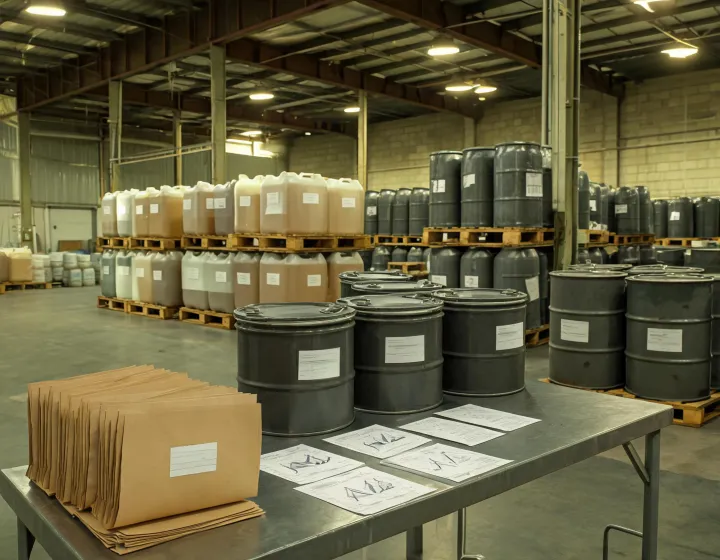
19identity and assay fields locked before outreach
13SDS, TDS and CoA checkpoints on a typical brief
15pack size and US destination questions compared
17formulation and process-window items kept visible
4open-grade flags we refuse to fill with defaults
Independent sourcing partner
Crop protection specification intake before factory quotes
Crop Protection Sourcing is an independent sourcing partner for US business buyers that need crop protection for formulation, packing or distribution programs. We collect the chemical name, CAS number when known, grade, assay, formulation, quantity, packaging and destination, then request factory wholesale quotations on that same brief.
This desk does not hold inventory, does not apply products, and does not treat a product-family page as proof that a named plant can supply the exact concentration. Handling, storage and transport stay bound to the exact SDS, UN number and carrier rules that the proposed supplier later confirms.
What a quotation must confirm, and what this desk does not state
Use the table as a buyer checklist. Public chemical-family references can frame questions; they do not replace confirmation for the exact quoted material, moisture limit, particle size or active content.
Field
Buyer records
Supplier must answer
Desk limit
Identity
Chemical name, CAS number if known
Exact grade and alternative if proposed
No borrowed identity from a similar family
Assay / purity
Requested concentration or open range
Assay method and certificate of analysis format
No performance claim from a typical assay
Formulation
EC, SC, WG, SL or technical concentrate
Carrier, stabilizer and pack compatibility
No mixing or use instructions
Documents
SDS, TDS, CoA, sample need
Current files for the quoted lot format
No site-owned REACH, TSCA or GMP badge
Transport
US destination and site constraint
UN number, packing group, flash point if relevant
Final carrier decision stays with qualified parties
Use pairs
Pair the purchase context with the fields that change the quote
Formulation and pack-off
Formulation desk
A formulator comparing crop protection technical concentrate needs viscosity, density, pH, solids content and residual solvent limits written on the RFQ so two plants do not quote different carriers under the same name.
Pack-off line
A packer filling jerrycans or water-soluble bags must state pack size, liner material and labeling language. Those choices change palletization and hazardous-material paperwork even when the assay looks identical.
Distribution and industrial programs
Distribution intake
A distributor staging a US warehouse should record crop or use, market registration questions and whether the brief is a sample, trial lot or firm order. Registration status is a supplier statement to verify, not a desk certificate.
Industrial program
A project buyer using a crop-protection chemistry in a non-grower process still needs the same SDS, flash point and storage range. Application novelty does not relax document checks.
RFQ questions
Questions that keep crop protection quotes comparable
01
Which exact grade, concentration or configuration is required?
Write the chemical name, CAS number if known, active ingredient, assay and formulation. If any field is still open, mark it as supplier-to-confirm instead of implying a default technical grade.
02
What must the quotation confirm about active ingredient and assay?
Ask for the stated active content, the assay method, and whether the certificate of analysis will report that method for the shipped lot. A related-grade SDS is not evidence for the quoted concentration.
03
Which SDS, TDS, CoA, packaging and transport items remain open?
List the files you need, pack size, pallet pattern, US destination and requested delivery window. Keep blank answers visible. Do not compare unit price until currency, quantity, Incoterm and freight exclusions line up.
04
Is a generic technical grade interchangeable with a registered crop-use formulation?
Those are different purchase bases. A technical concentrate and a registered end-use formulation can share an active ingredient while differing in assay, adjuvants, labeling and destination paperwork. Keep them on separate quote lines.
Sample and file notes before you send the brief
Define what a sample is meant to confirm: identity, appearance, assay, viscosity, particle profile, packaging or another buyer-approved criterion. A sample does not approve a production lot and does not authorize field use. After you submit, we review the product, quantity, destination and sourcing requirements, then request factory quotes.